Automate Technical SEO with AI: A Proven 5-Step Workflow
Automate Technical SEO with AI: A Proven 5-Step Workflow


SEO Basics Became Hygiene the Moment AI Mediated Search
It was only about a year ago that I really noticed how much Google’s results had changed. On any technical query, instead of the familiar blue links, what showed up first was a summary, sometimes stitched together by Google itself, sometimes powered by Perplexity or even ChatGPT. The headline might be mine, but the paragraph beneath was now algorithmic, repackaged without ceremony. It’s not subtle. Those AI-generated blurbs are the actual cover page for your writing—and a signal to automate technical SEO with AI so the preview works in your favor. If you publish online, that’s what most people see first, not your careful opening or clever diagrams.
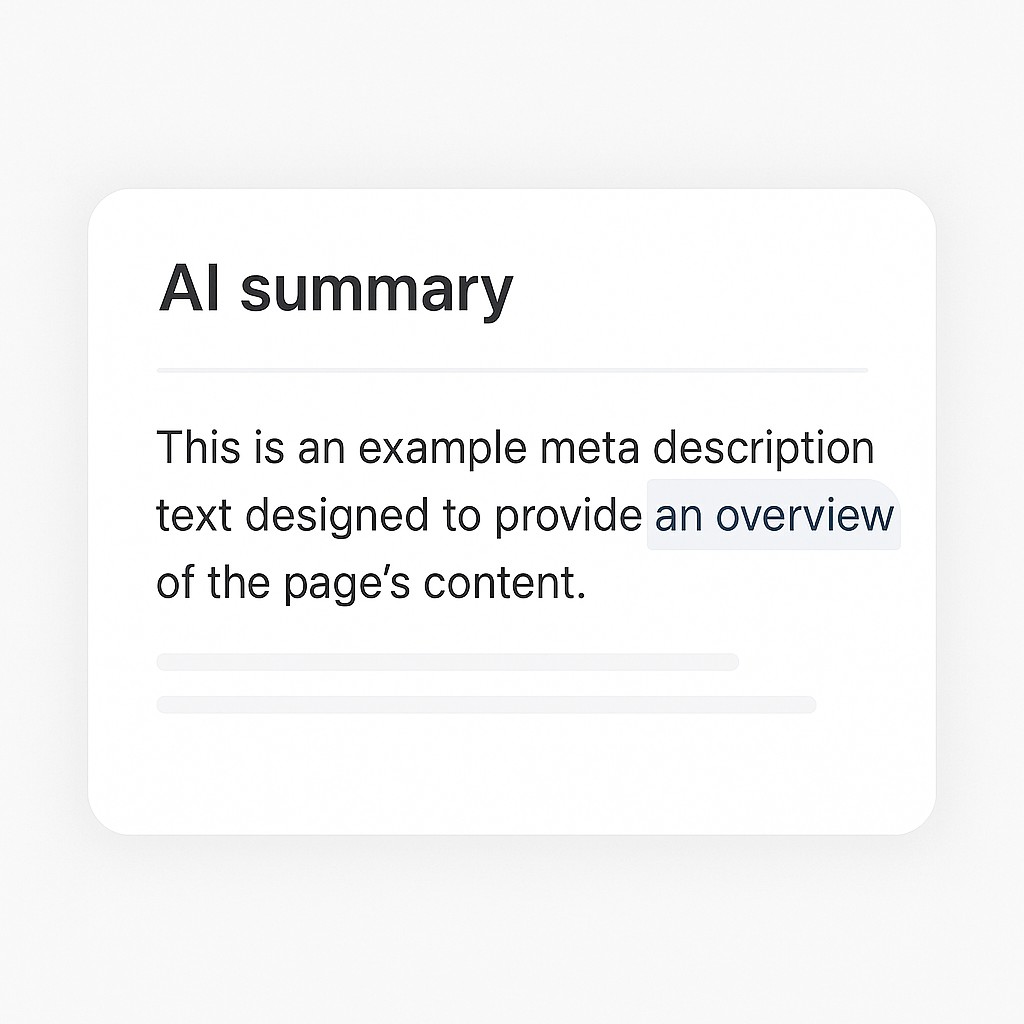
Here’s the honest part—six months ago I used to ignore SEO because it felt like marketing fluff. I thought metadata and search optimization were for people chasing traffic, not substance. If you’re a technical creator, you probably feel this too, or at least you know someone who does. It’s a shared bias. We default to “real content” and let those basics slide.
My workflow used to be simple. I’d publish a post, hope Google indexed it, and move on. Sure, I’d set a title and maybe a basic meta description, but it often felt like an afterthought. If you do this for long, one thing becomes clear—the difference between being read and being lost often comes down to a ~155-character snippet. That summary isn’t just good practice. It determines whether people click, skim, or skip.
The irony is that even super technical how-tos or deep dives are at the mercy of that summary. Search engines don’t parse nuance or intent; they parse structure. So if your post shows up with a missing or mangled meta description, that’s the first impression you just threw away.
I used to be annoyed by SEO busywork—meta descriptions, slugs, tags, those schema hints. They felt repetitive, interrupting the work I actually cared about. Now they’re just instant outputs from the AI. Metadata isn’t a chore anymore; it’s hygiene. I’ve gone from frustrated to grateful in a year.
Here’s the flip. Automate SEO hygiene with AI so every publish ships clean. You focus on the substance and let the systems keep you discoverable.
Search Now Functions Like an AI Interface—Your Metadata Is the Input
Every search result is now a tiny AI interface, surfacing short answers and summaries. It’s almost comical how normal this looks until you realize the technical reality. AI Overviews show up in 59% of informational searches and 19% of commercial ones. These summaries now dominate what users first see, according to Botify. Gone are the days when a carefully crafted intro guaranteed attention. If somebody asks a question, even a technical one, the results page is engineered to serve up a compact, AI-written response before your post ever gets a chance.
A huge part of that response is metadata optimization with AI, starting with your meta description. You get about 155 characters, sometimes less if there’s a snippet or context block. You can write it with intention or let Google cut you off mid-sentence. It’s a small window, but a deliberate one if you take ownership.
The engines do more than summarize. Parsers weigh your title tag, H1, every heading, alt text, and any structured data you give them—like schema.org markup. Even when Google rewrites your title tag, it points out which titles aren’t performing. Actual titles still anchor your SEO strategy, according to Seer Interactive. That means the hierarchy and clarity of your markup directly shape what gets parsed and presented back to the user.
Here’s the shift. SEO used to be guesswork. Now it’s guided work informed by AI SEO automation. I spend less time second-guessing whether my slug is readable or if my headers make sense for search. The AI will draft slugs, suggest schema hints for structured data, and even pull internal link ideas from my post history. For posts with technical details, I let the AI propose FAQ blocks that clarify core points, and then I edit for accuracy. It doesn’t remove me from the process.
It just clears out the repetitive grind. That’s what surprised me. Optimization is no longer a post-hoc mystery. Inputs get standardized and surfaced in seconds, so I can move on to something substantial. Some days, I still double-check outputs, skeptical about generic phrasing, but the bulk work is just done.
If search is an AI interface, you want to optimize your inputs—metadata, structure, links—before you ever hit publish. You shape what both humans and algorithms see.
And since I brought up those ~155-character blurbs earlier, it’s odd how they mostly remind me of ancient fortune cookies—short, sometimes unreliably accurate, but you always hope for a good one. I once saw my post summarized on Perplexity as “a guide to efficient workflows,” when the whole thing had been a teardown of legacy schema errors. That’s when I realized no amount of technical detail guarantees the right preview. You’re always rolling those digital dice.
Objections and Guardrails: Making AI-Driven SEO Habits Work for You
You’ve probably got the same three doubts that kept me cautious. You don’t have time to add yet another step, you worry AI will turn your post generic, and—let’s be honest—you just don’t trust a robot to summarize your thinking without introducing errors.
Let’s reframe this. The baseline isn’t lower now. It’s higher, and that’s a positive shift. AI didn’t lower the bar—it raised the baseline. The trick is guiding the system so it works in your favor. Target your prompts, add a short checklist (headlines, meta, link targets), and run a two-minute review before publishing. Here’s the kicker: Content that’s auto-generated, copied, or simply paraphrased gets the lowest possible rating—so originality and verification are essential to avoid demotion. You get to set the guardrails. AI helps with the repetitive tasks. You check the heart and details.
Honestly, I think of this like cleaning a kitchen after cooking. Wipe the counters, stack the dishes, sweep the obvious crumbs. Metadata hygiene feels the same. Quick, repeatable, rarely glamorous, but you notice when it’s missing.
Even so, there’s one thing I still can’t shake: sometimes, I’ll overthink how much control to hand over to the AI. I want the baseline clean, but I still catch myself rewriting snippets the old-fashioned way—just to nudge the tone or sneak in a phrase I know my regular readers hunt for. I haven’t found the perfect balance there yet, and maybe that’ll always be a moving target.
Stick around—the next section breaks down a workflow that trims your time investment and keeps accuracy front and center.
Automate Technical SEO With AI—A Repeatable Five-Step Blueprint
Step 1: Metadata Pass—Draft Precise Titles, Descriptions, and Headers
Start by automating technical SEO with AI through a quick metadata sweep. Feed your post’s core topic into your AI tool (I mostly use GPT-4 and occasionally Claude), and prompt it to recommend a precise title. Nothing fancy, just leaning on clarity and relevance. Get a meta description tailored to search intent (keep it under 155 characters), a clean URL slug, and suggested headers that align with your main idea. Direct requests make this go fast.
“Draft a compelling meta description for this post that summarizes its actionable takeaway in under 155 characters.” You’ll notice the outputs stabilize once you frame the prompt clearly and keep the task focused. Most tools will also spit back a full header hierarchy (H1, H2, H3) you can copy or tweak. This first pass takes a minute, not an afternoon.
Step 2: Structure and Signals—Schema Hints, Alt Text, and Pillar Links
The next layer is about adding signals that help both users and search parsers. Ask your AI to propose schema hints—Article, FAQ, How-To depending on your post’s content—and let it generate valid JSON-LD or HTML microdata wrappers. Drop in a list of your images and prompt for alt text that’s specific to the context (“Describe what this figure adds to the explanation, don’t just restate the caption”). For internal linking automation, ask for candidates that point to your pillar content: “List two relevant older posts for internal linking based on this draft.”
Here’s my admission—at first, I’d blindly accept the suggestions, but I’m faster now because I reframe them to fit how my site’s knowledge graph works. That means mapping out where a reader could deepen their learning, and spotting any content gaps. AI gets you 90% there, but you steer the actual connections to ensure real context.
Step 3: Accuracy and Originality—Sanity-Check Everything
Before hitting publish, do a quick fact skim. Check that key technical points didn’t get simplified or warped. AI can clean up phrasing, but you need non-generic specifics. Add HTML microdata only where it impacts summary display. Don’t clutter your markup just to tick a box. AI gets you close, but you keep things accurate.
Step 4: Publish With a Checklist—Test Rich Results and Snippet Quality
Before you push your post live, run a short checklist to automate documentation SEO. Use Google’s rich results tool to verify your schema actually triggers correct previews, double-check the quality of your search snippets, and deploy updates via your CMS or auto-publishing script. This last step prevents those “published but invisible” mistakes. Do this every time. It’s a five-minute investment that compounds.
Step 5: Refine and Iterate—Compare Live Snippets and AI Summaries
After publication, look at how your post shows up in actual Google results, but also how Perplexity and ChatGPT summarize it. Compare their output to your intent, note if anything feels flat or misses the point, and tweak your metadata or structure on the next iteration. Search summaries evolve fast now. Make it a loop, not a one-and-done.
Put this workflow into practice—use our app to draft clean metadata, headers, and internal links automatically, then publish faster with accurate summaries you control.
That’s the repeatable system. By adding this lightweight AI step, you automate core SEO hygiene, map your content’s connections, and keep optimization off the critical path. You keep shipping, stay discoverable, and spend your time building substance, not grinding out busywork.
Hygiene Compounds—Let Structure Do the Work
This isn’t a secret trick anymore. It’s the new hygiene. Every publish that ships with clean summaries, coherent structure, and linked context isn’t “optimized”—it’s simply maintained. You don’t have to chase algorithm quirks. You just keep your baseline tight, each post as regular as brushing your teeth.
The returns aren’t just immediate. Steady, accurate summaries shape how people and AI models perceive your work, week after week. Well-placed internal links let readers and search parsers cross your knowledge easily; your content stops vanishing into the pastebin of the web. Think of it as compound interest—every time you publish, you stack clarity and discoverability on top of what came before. This is the setup that lets you keep focusing on substance, not procedural fixes. Any time you skip these basics, a little friction sneaks in. Stick with them and the benefits add up, and you’re still moving fast in the right direction.
So, add the AI hygiene step every time you hit publish. Ship clean, let the baseline work for you, and spend your energy where it actually creates value.
Enjoyed this post? For more insights on engineering leadership, mindful productivity, and navigating the modern workday, follow me on LinkedIn to stay inspired and join the conversation.