Create Content for User Intent: Unlock Real Results Through Meaningful Connection
Create Content for User Intent: Unlock Real Results Through Meaningful Connection


Why Generic Content Fails Even Skilled Teams Who Create Content for User Intent
You’ve probably felt this: putting out content that looks fine on paper but never seems to drive the results you need. Right now, most business owners—including plenty I work with—are stuck in a cycle where their posts are technically correct, but they don’t connect. Here’s what changes: When you create content for user intent, you ensure you are solving your audience’s real questions—instead of just ranking on words, you drive higher-quality traffic and better results.
There’s always pressure to crank stuff out quickly, so the default is to lean hard on keywords. I get it, I’ve watched smart teams fall into this trap. Frequency doesn’t equal depth.
As an engineer, it’s natural for me to think in terms of matching, conditionals, and regex. Early on, I believed that if you just aligned the right patterns, you’d make content work. I assumed precision was enough.
That approach led to pages that checked every box, but rarely got a second look or closed a deal. You know the feeling—traffic trickles in, but readers bounce or never reach out.
And it’s not just me. Plenty of agency owners and founders I talk to are frustrated too, caught between the expertise they can offer and drafts that sound interchangeable with everyone else’s. If you’ve ever felt your advice disappear behind a wall of bland SEO writing, you’re definitely not alone.
The Shift: From Chasing Keywords to Chasing Meaning
Building content systems slowly pulled me out of my old habits. At some point—right around the time I was knee-deep in mapping workflows—I stumbled into the world of embeddings and semantic SEO strategies, and realized just how much I’d been missing. This wasn’t just a minor tweak. It was a wake-up call about how search, and honestly the whole idea of “content,” had changed.
Here’s the thing. Early search engines were laser-focused on matching exact phrases. You wrote “dog grooming tips,” so you kept stuffing that phrase wherever you could fit it. But early search engines stuck to keyword matching and constantly failed to get the user’s real intent, so deeper meaning was usually lost in translation. As I went down the content rabbit hole, I kept hearing about advances in semantic understanding—and it finally clicked why so many “optimized” articles fell flat.
A machine could guess at the meaning of text, not just match words. That’s the real breakthrough. Suddenly, I had to stop thinking like a parser and start thinking more like a person asking a real question.
So, what changed under the hood? Instead of just counting how many times “dog grooming tips” appeared, search engines started using something called embeddings. These are basically a way to turn the meaning of words and paragraphs into numbers. Imagine plotting everything you write on a huge multidimensional graph, where things with similar meanings gather closer together, even if the exact wording is different. The idea isn’t just to connect “cat” with “cat,” it’s to connect “cat” with “feline,” or even “house pet that likes to climb furniture.” That’s how the system starts to ‘understand’ what you mean, rather than just what you typed.
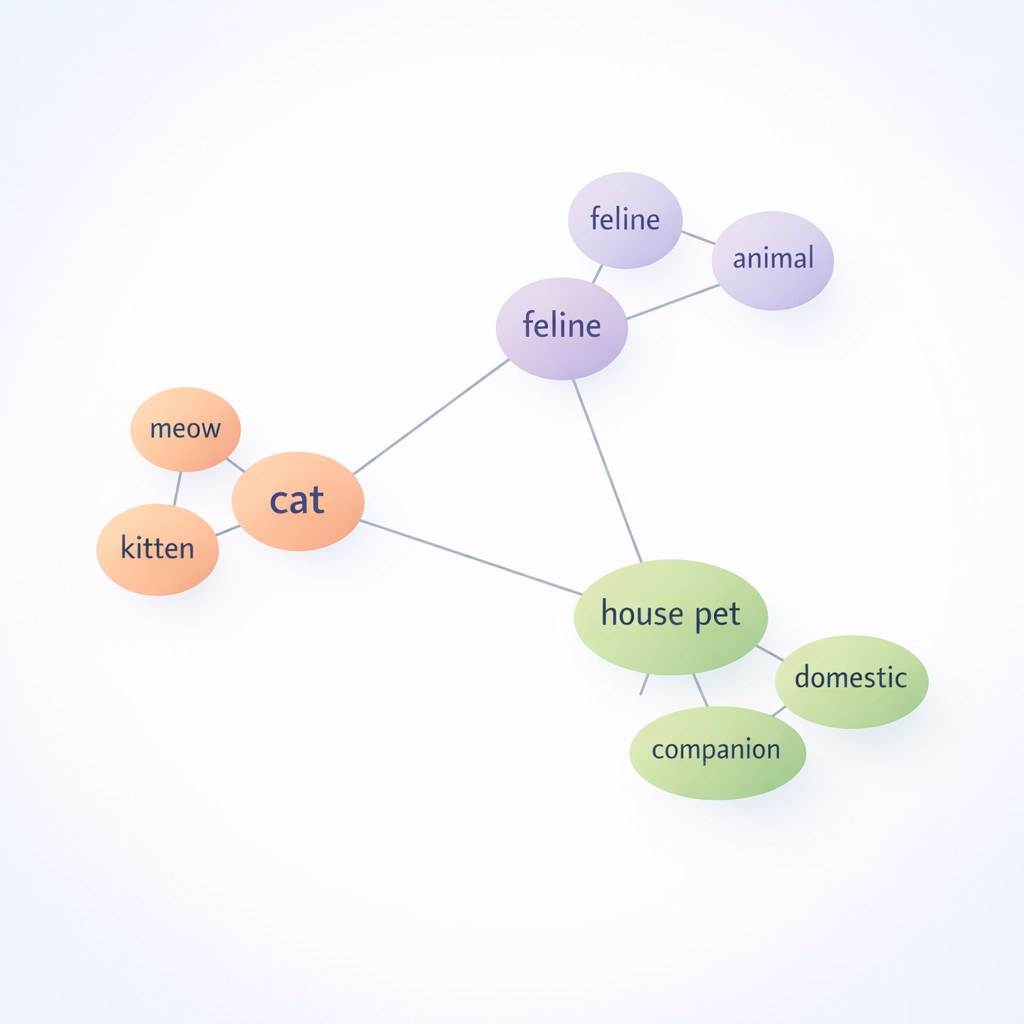
This is the missing link between what people actually search for and how content gets surfaced. Someone might type “how to get mats out of fur” while your article says “best ways to detangle pet hair.” Connecting the dots between user search behavior and what search engines actually do means we need to focus on the meaning behind the words—because that’s exactly what the machine is doing now.
How Semantic Depth Actually Changes Results
Content performs best when it fully addresses user intent and meaning, rather than simply repeating keywords. This is where most teams get stuck—they aim for coverage, but miss connection.
Here’s what’s different now. Primary and secondary keyphrases expand the semantic space—different angles on the same concept reinforcing the same meaning using different words. And Google’s gotten much better at spotting meaning in a query, so it’s no longer about matching words but truly optimizing for search intent. That shift changes how you plan from the beginning.
Let’s get concrete. When you write about “remote team management,” you can’t just stuff that phrase in every paragraph and expect results. Instead, you intentionally link concepts people actually search for: working across time zones, managing team culture from afar, choosing asynchronous tools, setting up digital check-ins. If you explain, for instance, how goal-tracking looks different remotely than in person—and reference not just “OKRs” but also “project milestones” and “accountability rituals”—you’re showing semantic depth. Those layered details demonstrate expertise (to both people and machines), and connect your advice to the questions readers bring.
Of course, every time I recommend putting in this extra semantic work, I get asked if it’s worth it. You’ve got deadlines and limited headcount. It’s a fair question—who actually has time to build all these connections out when the old keyword method feels faster?
Honestly, I’ve cut corners before too. It’s like when a technical bug looked fixable with a quick string replace, but left unseen edge cases everywhere. Fast, sure. Effective? Not so much—the same problem came right back. That’s what happens with the old “just match the keywords” playbook.
A while back, I hit a wall trying to paste together a huge set of help docs for a client. I remember chasing my tail, tweaking keywords in every heading, convinced I could force “results” if I could just find the right phrase. Looking back, most of those edits did nothing. Ironically, the only doc people actually shared was the one where I’d stopped caring about placement—and just wrote out the advice in the way I would have explained it to another engineer. That was the one that stuck. I’d like to say I learned the lesson right there, but honestly, it took a few more cycles for it to sink in.
Putting Semantic Value Into Content: Practical Steps for Real Results
If you’re eyeing deadlines and ROI, the idea of a semantic-first system might sound like a nice-to-have, not a must-have. I get that hesitation. But the truth is, investing in semantic depth builds a foundation that keeps paying off.
Each piece you create makes the next one stronger, instead of forcing you to start over every quarter.
So here’s a practical way to approach this. Start by picking out the core topics your audience cares about—not just what keywords rank, but what actually comes up in conversations, sales calls, or feedback. Then, instead of squeezing in every related keyphrase you can find, try mapping out associations: what concepts come up next to this idea, what terms do real users connect, and how would a person frame their question to ensure meaningful content creation? Search engines probably need keyphrases far less than I thought they did. But users still do. The trick is to serve both—reflecting natural language and meaning, not just technical matches.
To dial in on what people actually want, make researching user questions part of your workflow. Scan forums, review sites, or the “People Also Ask” feature. Then map real questions to meaningful answers, not canned responses. This results in content that satisfies searchers, which search engines are designed to reward.
Another move. Layer in examples from the real world—client wins, project mishaps, metaphors that make abstract concepts concrete. Keywords signal meaning, they don’t prove it. Actual stories and analogies add context machines recognize and readers remember.
You don’t have to flip your whole process overnight. Just shift bit by bit, and you’ll start to see how your expertise becomes both visible and discoverable. The payoff is lasting—and you’ll spend less time fixing content that never connects.
Meaning Over Matching: Bringing Your Expertise Forward
We’ve come a long way from the days of obsessing over keyword density. Like a lot of engineers, I used to think precision matching was enough—just hit all the right phrases, and the content would work. But as platforms have shifted, so has the standard—you’ve probably felt that push, too, trying to move from what looks right on paper to what actually resonates in practice.
Here’s the core lesson. Repeating a phrase doesn’t show depth. These days, search platforms reward clarity of meaning and intent—not how many times you can squeeze a term into a paragraph.
So the next time you plan content, focus on what your reader truly wants to learn or solve, not on stacking more keywords. When you lead with intent, you’ll notice your work surfacing more, and drawing the right people in.
In the end, going semantic-first is what lets your actual expertise break through. And get found. If you want your ideas to matter, that’s where to start.
If you want content that actually reflects your expertise and connects with your audience, try Captain AI to generate your next article for free and see the difference for yourself.
Some days, if I’m honest, I still feel the pull to fall back on pattern-matching. Habit is stubborn. Maybe that’s just what happens when you’ve spent years thinking in if-then statements. But I’d rather sit with that tension than pretend it’s solved.
Enjoyed this post? For more insights on engineering leadership, mindful productivity, and navigating the modern workday, follow me on LinkedIn to stay inspired and join the conversation.