AI Orchestration Strategies: Structure Expert-Level Output, Not Just Smarter Models
AI Orchestration Strategies: Structure Expert-Level Output, Not Just Smarter Models

Why Does AI Content Still Miss the Mark?
If you’ve ever asked an AI to draft something important—website copy, sales emails, even just a blog post for your industry—and gotten back a pile of generic words, you’re not alone. It’s strangely universal. The more you know, the more the output grates. There’s always this subtle feeling of “that’s not how I’d say it.”
I’ll admit, when I first started poking at newer models, I kept thinking the problem was the underlying ‘intelligence’ just not being there yet. Part of me wondered if something real had shifted with these new tool-using agents, but I was pretty skeptical. Deep down, I recognized that AI orchestration strategies—not simple cognition—were the foundational concept behind effective outcomes.
But then I watched Claude Code tackle a real task. It chained together a dozen different tools, checked its output, backtracked after hitting an error, and somehow ended up with a working transformation script. For just a moment, it felt like I was watching something think. There’s this surface illusion—function calls flurrying, imperfect but purposeful—and at the end, there’s a file you can actually use. You could almost forget it was all scaffolding and structure.
Here’s where the floor dropped out: the satisfying output wasn’t proof of intelligence. It was proof of care in everything built around the model. The magic is everything around it. The illusion works because the orchestration is tight, not because the model is clever.
So, if you’re still chasing magic models, it’s time to shift focus. We get to design systems that actually capture what we know. Ones that make AI work like an extension of our own expertise.
What Actually Creates Expert-Level AI Output with AI Orchestration Strategies?
It’s easy to think that if you choose a “smarter” AI model, you’ll get smarter content. But models aren’t actually intelligent in the way we like to imagine. They’re not experts holding context in their “heads.” They’re only as good as the environment they operate in: the harness, the scaffolding, the orchestration you wrap around them. True orchestration means coordinating not just models and agents, but also data flows, pipelines, and all the integrations that power results across an organization IBM. It’s not cognition. It’s context, tools, and orchestration that make the difference.
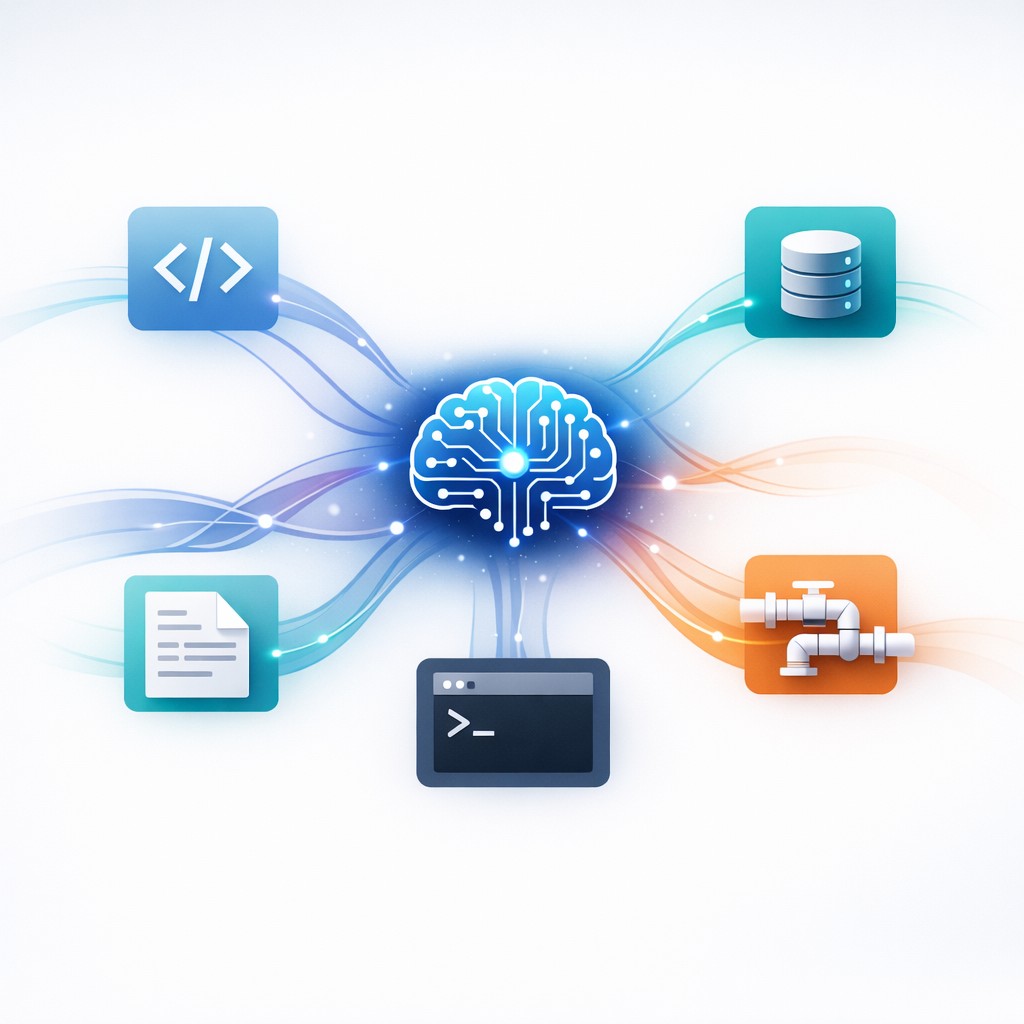
Let’s get specific. Picture using Claude Code for a tricky migration. The AI not only pulls rich context from your entire codebase, but also dips into your commit history, understands the evolution of a function, and draws on code search to ground its suggestions. It goes further—it toggles between terminal commands, automates file edits, and cross-references documentation, all without losing the thread.
Modern agentic workflows push tool use far beyond basics—AI tool integration now allows AI to select from richly described functions across search, productivity, image generation, and more, stringing them together as needed. There’s a choreography at play. Unlike a vanilla chat, your output accumulates layers of insight because the AI isn’t just guessing from a prompt—it’s actually working through the specifics that matter in your context.
Zooming out, Anthropic’s internal approach is striking—a full system equipped with eighteen distinct tools, thousands of tokens dedicated to precisely tuned system prompts, and entire sub-agent prompt chains. Each piece exists purely to wrangle compliance and reliability out of the base model, which would otherwise just take a swing and hope for the best.
Why do “default” outputs feel so bland? They’re missing all these layers. Most chat interfaces serve up lowest-common-denominator text because they skip orchestration, context, and tooling. You’re getting a one-size-fits-all guess instead of a crafted response.
Here’s the core reframing. The model’s “intelligence” never changes. The difference is in how you orchestrate. The model is the same. The harness is the product.
What’s Lost When You Stick With Default AI Output?
If you’ve felt that AI-generated content comes out sounding like it was churned out on an assembly line, you’re not imagining things. That rote, faceless tone doesn’t just make your business sound indistinguishable. It quietly erodes the credibility you’ve built, diluting your expertise and blurring the edges of your brand—especially when you know your audience expects more from you.
Honestly, early on, I questioned whether wrestling with context and system design would matter. It felt like overkill. Why not just roll with whatever came easiest? There’s a real temptation to accept “good enough” when you’re busy. Still, I couldn’t shake the feeling that something wasn’t adding up.
Compare that “default chat” experience to a system designed to reflect your exact standards—the kind that bakes your voice, insights, and quirks right into the workflow. A basic chatbot spits out answers with no sense of your priorities. A well-orchestrated setup guides the AI with real guardrails: tailored prompts, sample language, and clear procedures. For example, imagine mapping your process for onboarding new clients—not just the steps, but the touchpoints that matter to you—so the AI can craft emails and reports that sound like you, not everyone. It’s the difference between a generic secretary and a teammate who knows your style.
It reminds me of the time I tried to automate a weekly report template using an early agent setup. The AI managed to fill in the numbers, sure, but the section on “insights” came out looking like it was written for a different company. Halfway through, I realized I’d never bothered to feed it our prior commentary or the actual questions we cared about. So, I had to manually edit every single one that week. That weird disconnect stuck with me—not just a one-off, but emblematic of the missing orchestration in most AI systems.
So here’s the tradeoff. Orchestration takes upfront energy. You need to actually design the system—mapping out your expertise, deciding which tools to integrate, and setting the rules that matter most. That’s the heavy lift. But when you get it right, you unlock something big. A system that scales your standards, extends your distinctive approach into every AI output, and lets you work at a new level of leverage. The payoff is exponential. Instead of fighting the defaults every time, you create a setup that adapts and evolves alongside you.
Those who master orchestration will create adaptive AI solutions that truly echo their standards and scale their creative capabilities. This is what makes the investment worthwhile. It’s not just about saving time, but about making your technology serve what makes you unique, not what’s easiest for the model. If you want AI to push your business forward, you can’t afford the shortcut.
How to Orchestrate AI That Speaks With Your Voice
Let’s make this shift clear. Intelligence isn’t baked into the model itself. It’s your system architecture—the harness, the context, the checks—that actually makes its work real.
Six months ago I struggled to see what was actually meant by “context engineering.” The edge in enterprise GenAI comes from building AI context by structuring the right data for the AI’s window Moody’s. Without it, models default to generic or risky outputs. That single adjustment, adding context, is where everything starts to snap into shape.
So what does it actually mean to orchestrate your own system? You begin by defining context—what background, facts, or tone should always be at the AI’s fingertips? Then you chain tools together, letting the AI pull from specific APIs, documents, or data when needed instead of “hallucinating.” Finally, you focus on AI feedback loop optimization, creating mechanisms for you or your team to correct, flag, or steer outputs. Your system gets sharper every time you use it.
Picture this in action. A consulting firm wants every deliverable to match its internal standards—not just in terms of format, but substance and style. They set custom system prompts that bake in their knowledge base. They use dedicated tool APIs to automatically pull the latest market research. They include an integrated review checklist. Every output the AI produces is automatically evaluated, not just for grammar, but for accuracy, tone, and alignment with client requirements—the key to making AI outputs smarter and continually improving deliverable quality.
This process isn’t one-and-done. The more you tune, tweak, and respond to where outputs still miss, the more the system morphs to truly reflect what makes your work distinct. As capabilities keep evolving, the systems you shape today will be what lets your expertise scale without getting diluted tomorrow. I sometimes wonder if there’s a threshold—how much fine-tuning is enough? If I’m honest, I haven’t settled on a clear rule. Maybe it’s always a moving target.
Orchestrate or Be Orchestrated
If that first wave of frustration still feels familiar—the bland, off-target outputs that seem to flatten what you know—this is where orchestration steps in. Built right, it stops AI from steamrolling your expertise and finally makes it work on your terms.
Switching from easy, default use to intentionally designing these systems is always uncomfortable. I doubted whether it was worth the hassle, and I get why you might, too. But the product changed the moment I invested in orchestration. Suddenly, every hour felt like it was moving the needle, not just patching up half-finished drafts.
See for yourself how a well-orchestrated AI platform can capture your voice by generating a free, expert-level article in just minutes—no setup or prior experience required.
Here’s where we are now. “Good enough” is table stakes. Real advantage flows to those who master context, tools, and orchestration. This isn’t just a technical upgrade. It’s how high-performing teams are future-proofing their brands and raising the bar across entire industries.
So experiment, iterate, and invest in harness design. The payoff isn’t just better AI content. It’s AI that reflects what you actually stand for.
Enjoyed this post? For more insights on engineering leadership, mindful productivity, and navigating the modern workday, follow me on LinkedIn to stay inspired and join the conversation.