When Perfect Optimization Still Leaves Rankings Flat
When Perfect Optimization Still Leaves Rankings Flat


When Perfect Optimization Still Leaves Rankings Flat
I remember the exact feeling—pushing hundreds of articles live, confident every on-page box had been checked, and then watching rankings stall for months. All that technical work, every SEO detail dialed in, and still something crucial missing. Backlinks—and how to get backlinks—were the missing piece.
Honestly, the appeal of technical SEO was how controllable it felt. You get to tick boxes, see obvious progress. For years, I leaned on structure. If it’s a checklist, I’m comfortable.
Then came the reality check. All that optimization gets you nowhere without real authority pouring in from outside. And authority isn’t something you manufacture—it’s something others grant. Backlinks sit at the center of that shift.
Most SEO is execution. You optimize titles, links, images. Backlinks? That’s persuasion. You have to earn someone else’s trust and convince them you’re worth citing. You can’t schedule it or brute-force it onto your roadmap, not without running into a wall.
So if you’re a founder sitting on a stack of optimized pillar pages, a carefully woven network of internal links, perfect meta tags—stop blaming tiny onsite tweaks for stagnant rankings. At a certain stage, the bottleneck isn’t your technical chops. It’s that your content hasn’t built enough external trust. Authority is the lever—and you can’t pull it alone. It’s frustrating, especially when your niche is crowded and “doing everything right” burns time. But authority is what compounds and unlocks rankings, credibility, and the kind of growth you can actually feel.
I'll admit, one late night I found myself staring at an analytics dashboard, convinced there was another technical detail I’d missed. Spent an hour fiddling with schema markup, double‑checking redirects. Nothing moved. That was the moment I stopped assuming more control was the answer. Sometimes, it just isn’t.
Why Authority Is Earned—Not Claimed
Authority, in real terms, is something granted to you from outside, not something you self-declare. Backlinks are those rare, external votes of confidence that both algorithms and real people trust because they’re, frankly, out of your hands. When a page accumulates lots of backlinks, it tends to outrank others—on Google, the #1 result averages 3.8x more links than the next nine source. It’s the one variable you simply cannot manufacture. And paradoxically, that’s exactly why backlinks drive the biggest impact. They prove your relevance and reliability through someone else’s endorsement.
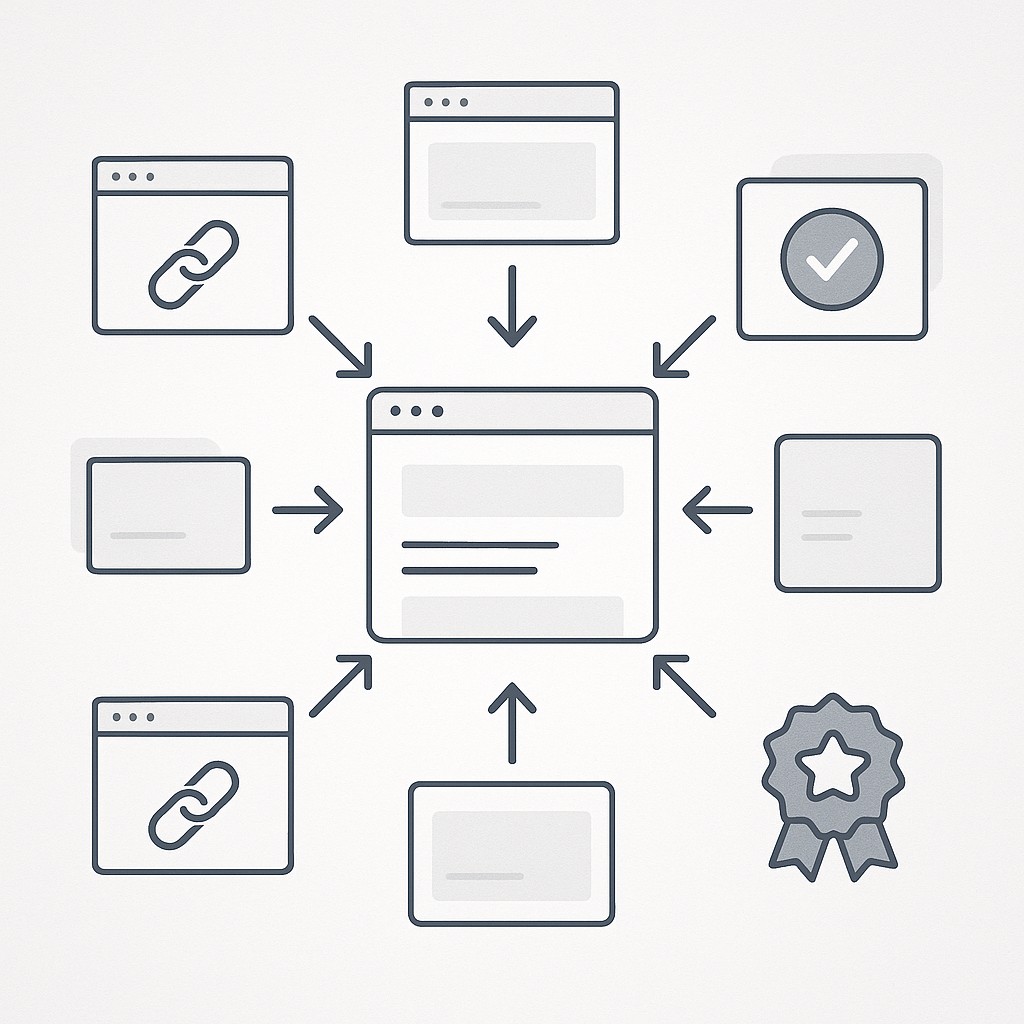
It’s not from lack of trying. You can hammer internal links, architect perfect content pillars, sculpt meta tags until they sing. But you can’t simply decide to have citations, even if every part of your site calls for it. Other people have to choose to link to you; you’re at the mercy of their interest and standards.
If I’m honest, backlinks give me anxiety. There’s always uncertainty. Will my outreach work? Is this article really “link-worthy”? How do you persuade an expert—who’s never heard of you—to cite your work?
Let’s face it: founders and marketers doubt the entire backlink game. You’ll question if the time investment will ever pay back, worry the process feels unpredictable, or fear your niche is just too niche to draw links at all. I get it—I used to think the same. Six months ago, I was sure “good content” would fix everything. The reality is, link earning isn’t random. It’s a link earning strategy built on planned persuasion.
Each asset has specific audiences who cite for predictable reasons, often triggered by certain data, tools, or unique guides. If you map who links to your competitors, you’ll notice patterns—resource pages, roundups, industry report citations. Building at least one proven link magnet, modeled after what’s already attracting links, flips this from “hope and hustle” into replicable tactics. Forget waiting on luck. The process becomes about making your content impossible to ignore for the right linker, in the right context. Authority compounds as you earn it, unlocking ranking and credibility on a scale that no amount of onsite tweaking can ever match.
From Audit to Action: How to Get Backlinks by Building Assets That Actually Earn Links
Let’s get concrete. Start by looking at your content with fresh eyes and ask, if you weren’t you, would you actually cite it? Not just “is it useful,” but is there a reason a third party would send their own audience here? This was the moment things clicked for me—I needed a way to work on persuasion without pretending I controlled outcomes. So I started auditing each asset for genuine link‑worthiness, not just for polish or optimization, but for true citation value.
So what counts as link‑worthy? Three things, mostly, define linkable assets. Original data (novelty), tools or templates that make a job easier (utility), and genuinely comprehensive syntheses (authority). Each ties directly to a reason someone would cite: to prove a point, save time, or not have to write the explainer themselves.
A quick story here. Years ago, I built a basic event tracker spreadsheet for a local meetup. I kept thinking the right features would sell it—a “see all signups at a glance” view, little color-coded tags. Turns out, the reason the organizer actually adopted it wasn’t the features at all. It was because it made her look prepared in front of her peers, and she could say, “We’re using a standardized tracker now.” I thought I was pitching benefits; she was thinking about status and ease. A citation’s the same. Links happen where your asset solves the real social or practical issue for the person citing. Status, credibility, time saved—those are the triggers.
So after you gauge your own assets, shift to mapping your actual linkers and what triggers their citations. These are often academics looking for stats, analysts collecting evidence, trade editors needing examples, instructors referencing definitions, or community leaders looking for tools. Pinpoint what each actually cites: is it data? A concrete example? A free utility?
Now, don’t guess—study your sector’s winners. Look at competitors who are pulling in citations. Watch which assets are getting linked. It’s usually original research, comprehensive guides, and free tools. Reverse‑engineer their hooks; ask what made their resource irresistible for the linker. Model at least one link magnet using those same drivers, not in theory, but as a practical asset you can point to and say, “That’s our inroad to external authority.”
It’s not about control. It’s about creating the kind of resource that makes saying “no” to citing you feel like a loss. This recalibration—from just executing checklists to deliberately building for persuasion—unlocks a compounding effect you’ll never find with optimization alone.
Sometimes I wish there was a simple formula for this. For every backlink problem I’ve solved, there’s a new wrinkle the next quarter. I still lean on optimization, but I know it’s persuasion that moves the needle. I haven’t figured out how to make outreach feel natural, but I keep trying.
Translate Persuasion Into Execution—Build Your Citation Magnet
Pick one asset to build this quarter—designed around how to get backlinks and the kind that best matches what your ideal linkers actually cite. Maybe that’s a research summary, a lightweight tool, or a deep synthesis. Choose the format with the strongest trigger for external citations and commit to it.
Now, set it up for easy quoting and reference. To create link-worthy content, put the most quotable claims, methods, or definitions right up front, so no one has to dig for them. Structure with scannable headings and connect internal links to other relevant articles. Remember, your pillar structure, internal linking, and even the meta description matter here—it needs to be effortless for someone evaluating whether it’s citation-ready.
When you draft, include standout data points, explain your methods clearly, and embed visuals that others will want to reuse. Your goal is simple: give any linker everything they need to quote, embed, or reference your asset without hassle—a good chart, a tight summary, something tangible.
Don’t spray and pray. Build a shortlist of 30–50 high-fit linkers—people or sites that have cited similar resources before. Reach out with a personalized note that actually connects their audience’s needs to your asset. Sequence your outreach to land around their publishing cycles, not just when you happen to hit send. That means checking whether they update resource lists quarterly, publish roundups monthly, or post news every week. Catch them when citations are most likely, not when your calendar says you’re done.
And once it’s out there, track what happens. Measure the referring domains, the relevance of the anchor text, which content is seeing assisted rankings. Double down on what’s working—when you earn quality backlinks from authoritative sites with relevant anchor text, you see stronger gains in both page authority and search rankings source. Refine your asset and tweak your outreach as you learn which hooks are converting. Authority isn’t an accident. It’s an ongoing, repeatable process.
Use Captain AI to draft a clean, structured article fast, giving you a starting point for a link‑worthy asset so you can focus time on outreach, citation triggers, and earning real authority.
Commit to Off-Site Authority—Set a Cadence, Earn Trust
Let’s re-anchor the whole point: authority isn’t what you say about yourself—it’s what others are willing to say on your behalf. That’s why backlinks actually move the needle. Authority compounds and unlocks rankings and real credibility because it comes from others vouching for you, not you vouching for yourself. All that onsite work is necessary, but only external trust signals create lasting leverage.
Here’s what sustains progress. A simple, real-world backlink strategy. Build one link magnet per quarter, map your best-fit linkers monthly, and actively reach out or follow up once a week. Don’t wait for big blitzes. Small, consistent persuasion beats sporadic sprints every time. Bank on steady effort over bursts.
If you’re still uncomfortable with outreach or the messiness of influence, honestly—I get it. I still prefer checklists. I just plan for persuasion now. That discomfort fades after the first few citations land. Back in that dashboard moment, I never imagined it would get easier, but it does. When you see momentum, the process starts to feel normal.
So, the next step is clear. Audit your existing assets for true link‑worthiness. Map out your top 50 linkers and what actually triggers their citations. Build a proven link magnet modeled on what’s already earning for others in your space. It’s not about waiting for luck. It’s about making the mechanics work in your favor—deliberately, and on a schedule you control. Authority compounds, but only when you make earning it part of your standard practice.
Enjoyed this post? For more insights on engineering leadership, mindful productivity, and navigating the modern workday, follow me on LinkedIn to stay inspired and join the conversation.