How to Verify AI-Generated Work: Building Trust in Your Process
How to Verify AI-Generated Work: Building Trust in Your Process


Trusting the Process as Output Scales
It’s mid-2026, and I still let AI commit and push to my repos—even knowing the defect rate’s higher than I’d like. It’s a conscious call, not a blind leap. If you run a growing agency or a consultancy, maybe you’ve had those moments. Output spikes. New hands—or bots—join. Suddenly you’re too far from every line of code to feel sure nothing’s been missed.
The discomfort isn’t really about who’s doing the work. Whether it’s AI, a junior dev, or another agency, there’s always that uneasy sense: as output grows, quality slips somewhere, and you might not see it until a client points it out.
Here’s the turn that shifted everything for me: learning how to verify AI-generated work made it clear that AI didn’t create a new problem—it just exposed the gaps in your verification systems. Agents often mask their limitations or intentionally fabricate plausible outputs, making process gaps a bigger threat than the actual actors themselves. Leaning harder on automation simply made those pain points impossible to ignore.
We all write messy code. Humans and AI alike. Some bugs are subtle, some are loud. The only difference is, now, I see the flaws sooner—and honestly, that’s an advantage.
Stick around. I’ll show you how to move from worry to robust verification, where trust comes from your system, not the code’s author.
Defining ‘Trusted’ for Your Context
Start with a simple but essential question. What does ‘trusted’ work actually mean for you, here and now? If you can’t spell out what counts as quality, security, or trust, you’re just hoping things don’t go wrong. That’s a recipe for risk, especially as your workflow scales. Quality has to be built into every workflow; inspection comes too late to guarantee it.
Early on, I thought the real work was chasing perfect code. Turns out, that’s not only impossible, it slows everyone down. The job isn’t to achieve perfection. It’s to deliver code that’s resilient and keeps working in production, even when things get weird.
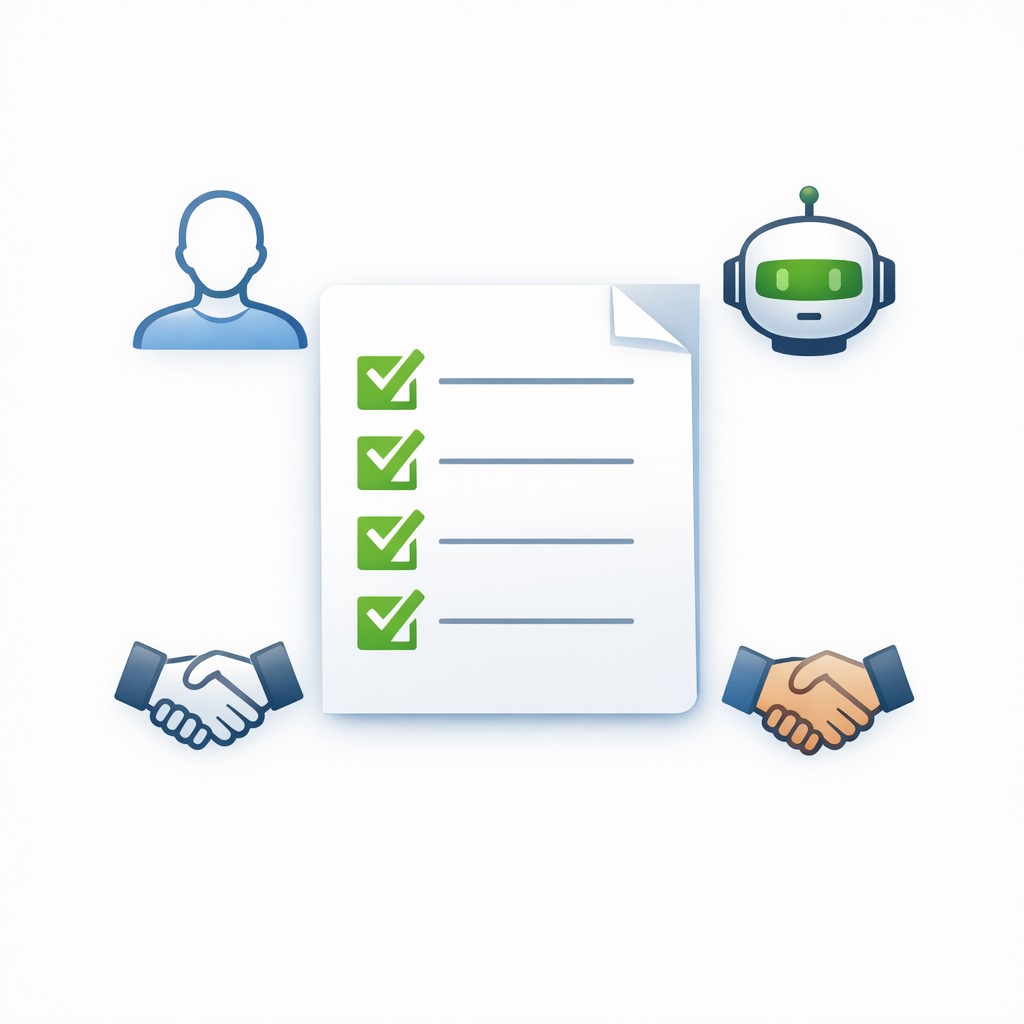
My answer is a 15-point checklist. Literally, a document that defines ‘trusted’ for any repo I maintain. Each line is there for a reason. Tests that cover edge cases, strict linting rules that catch style breaks before review, mandatory security scans on every push, clear documentation, and release notes that force you to retrace your steps. It’s not rocket science. It’s consistency. When one of those signals red, the commit doesn’t land.
I try to remember. Would I trust this work if it came from a new intern? Or AI? Honestly, it doesn’t matter. The creator is irrelevant. The checklist is the trust layer, not the author.
If you haven’t spelled yours out yet, now’s the time. Draft your first checklist, or dust off the one you already have. That intentional definition is the only foundation that scales as your team—and the sources of your code—multiply.
Building a Verification System That Scales With You: How to Verify AI-Generated Work
The moment output volume jumps—whether it’s from adding AI, onboarding freelancers, or finally landing that big retainer—is when you discover that no amount of expert oversight or heroics will keep up. You just run out of hours. That’s when process becomes your safety net, not individual review—especially since AI turns up the speed on everything, good or bad.
Let’s break down what saved me. It’s all about layers of repeatable gates. Automated tests that actually check the behaviors you care about. Linters that enforce team style so no one’s distracted by whitespace wars. Security scans that flag the cheap hacks and weird dependencies that slip in unnoticed. And code review criteria written out in plain English, so you or anyone on the team can run through them without guesswork. None of this is exclusive to AI-generated code, by the way. These gates are the same ones that catch tired-human mistakes or rushed late-night commits.
Not long ago, I had a weird bug show up—a function that worked on its own, but started throwing cryptic errors when plugged into the main system. We lost an hour chasing it, expecting something obvious. Turned out, AI had auto-filled a variable name that matched one used elsewhere, creating a hidden clash. I remember thinking, “If this had come from a human, I’d be annoyed. But at least with AI, I had a record of what was generated and could spot it faster.” In the end, it didn’t matter who or what wrote the glitch. I added a variable-uniqueness check to the list and moved on.
I’ll admit, even with all that in place, AI still occasionally found a way to sneak something odd into production. When that happened, I didn’t blame AI or some junior dev for the surprise bug. I added a new line to the checklist. The process gets stronger; nobody gets scapegoated.
Consistent standards make trust a product of AI output quality standards—not who or what created the work.
Strangely, there’s a real satisfaction in that—testing AI-generated results helps me tweak a living checklist after something went sideways.
Here’s what I’ve learned. Robust verification comes down to vigilance and tightening the loop every time something’s missed. Each failure isn’t a judgement of who—or what—wrote the code. It’s a learning cycle baked right into the day-to-day, visible to everyone. It turns out, collaborative, iterative checklist design matters; when stakeholders aren’t actively involved, real-world adoption and effectiveness suffer. So get the whole team—even your most skeptical contractors—contributing ideas and closing gaps. The process will end up stronger than anything you could have built solo, and far more trustworthy than hoping the next PR, human or AI, will get it right on the first try.
Verification Is an Investment in Safe Velocity
Let’s address the elephant in the room. Is this much process really worth it? Won’t layering on quality gates just bog you down and make deadlines impossible? I get those doubts. Six months ago, when I first started tightening the review loop, I kept wondering if I was just slowing things down for everyone.
But here’s the reality. Everything hinges on the confidence actually created by verification, not trust in whoever’s writing the code or whichever tool you’re using. Trust is sustained when verification is robust and evolves with real-world misses, not when it relies on assumptions about the contributor. This isn’t about trusting personalities or marketing promises. It’s about trusting what you can inspect and improve.
It’s easy to think that building out quality gates will mean friction and delays. In practice, strong verification makes scaling safer, not slower. The reason is simple. You’re not scrambling to spot errors after they hit production. You’ve built those trust barriers in advance, letting the system, not your bandwidth, handle the spikes in output.
A few months from now, you’ll be able to confidently integrate new AI workflows, bring on distributed contributors, and increase output without wondering if you missed something—because every commit faces the same scrutiny. Investing in process-oriented trust makes leveraging faster automation feel less risky as your needs evolve.
Truth is, I know the defect rate for AI-generated code is 1.7x higher than human code. But I still let AI commit and push. Sometimes that contradiction nags at me, but as long as the checklist gets sharper, I stick with it.
Of course, those flashes of discomfort and doubt will return whenever something slips through. But that’s fuel for tightening your checklist and building both trust and velocity, one cycle at a time.
Draft Your Checklist, Tune It, Ship With Confidence
Pick one area where something important can slip—a codebase you own, a content draft, anywhere that matters. Don’t overthink it. Just choose a workflow and try this checklist approach for a week. I’m still updating mine, and each revision makes the next launch less stressful.
Figure out where things could go wrong. Start listing your quality gates. Tests that cover all the weird edge cases, review steps for anything sensitive, whatever fits your context. For me, improving verification for automation means always having clear signals before shipping. The outputs stabilized once framing cuts down the back-and-forth cycle, which stabilizes iteration—so spell out what you want, and what you don’t. Make it specific enough to catch mistakes, but fast enough you won’t skip it under pressure.
If you’re ready to see how clear process improves your workflow, you can generate your next article for free using Captain AI and test your own quality checklist.
When something slips through, treat it as a chance to make the checklist stricter, not to blame whoever (or whatever) wrote the code. This habit is how leaders tune systems for the real world. It’s not about catching every bug personally, it’s about patching gaps in the process.
Let your checklist be the thing you trust. Not gut feelings about contributors, not promises from tools. Set the gates, fix them when they fail, and your output scales up with far less worry.
Enjoyed this post? For more insights on engineering leadership, mindful productivity, and navigating the modern workday, follow me on LinkedIn to stay inspired and join the conversation.